Setup
Supported devices
iOS Simulator
Android Emulator
Real device
Web browser
iOS Simulator
On the iOS Simulator, Mimicry configures the proxy and installs the certificate for you automatically.
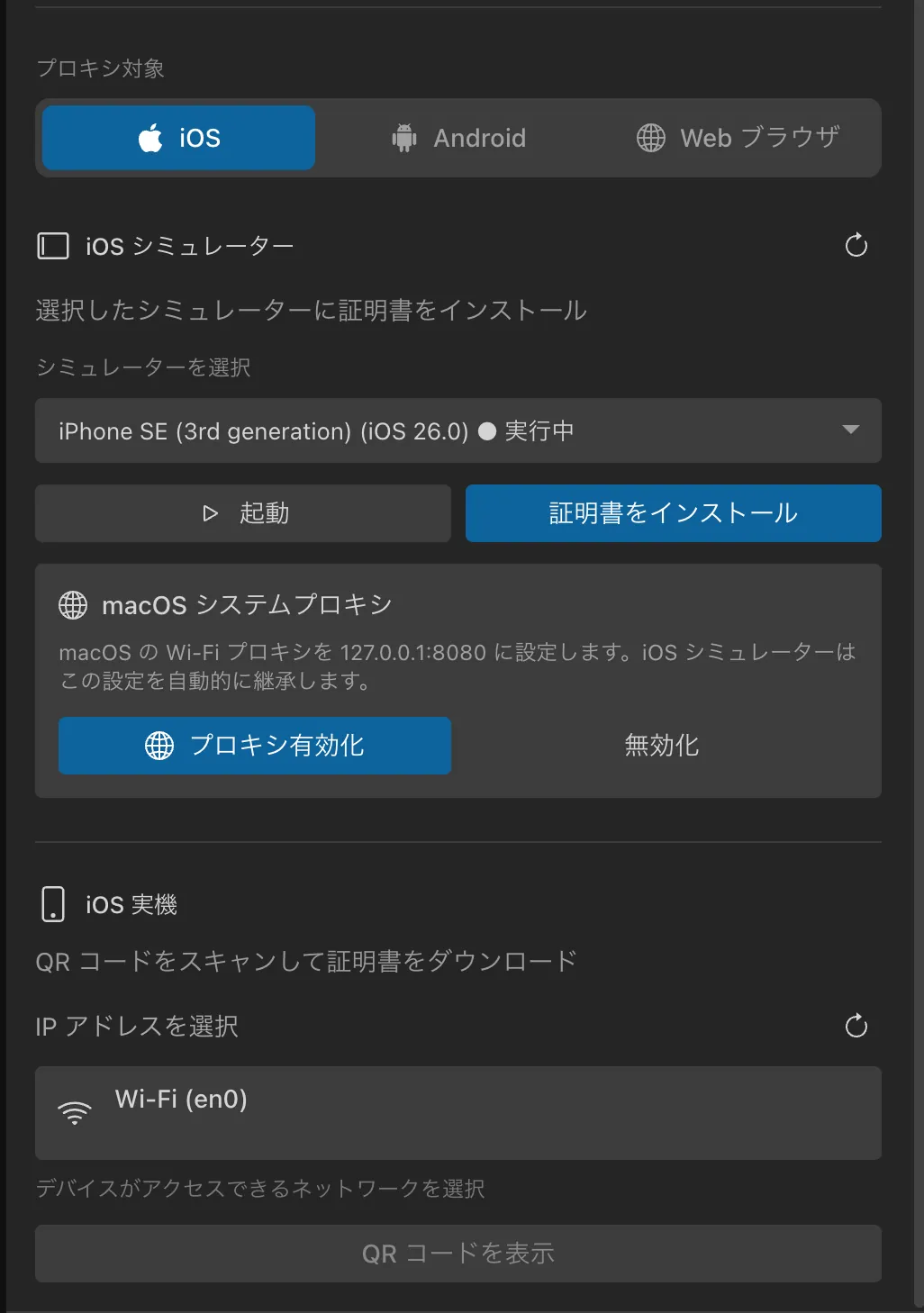
Launch Mimicry and click Proxy Settings at the bottom of the sidebar.
Select iOS.
Click the Install Certificate button. The certificate is installed on the iOS Simulator and the proxy is configured automatically.
Run your app and its traffic appears in Mimicry's Traffic Log.
Note: You don't need to reinstall the certificate after restarting the iOS Simulator. The proxy settings are applied automatically on restart.
Android Emulator
Here's how to set things up when using the Android Emulator.
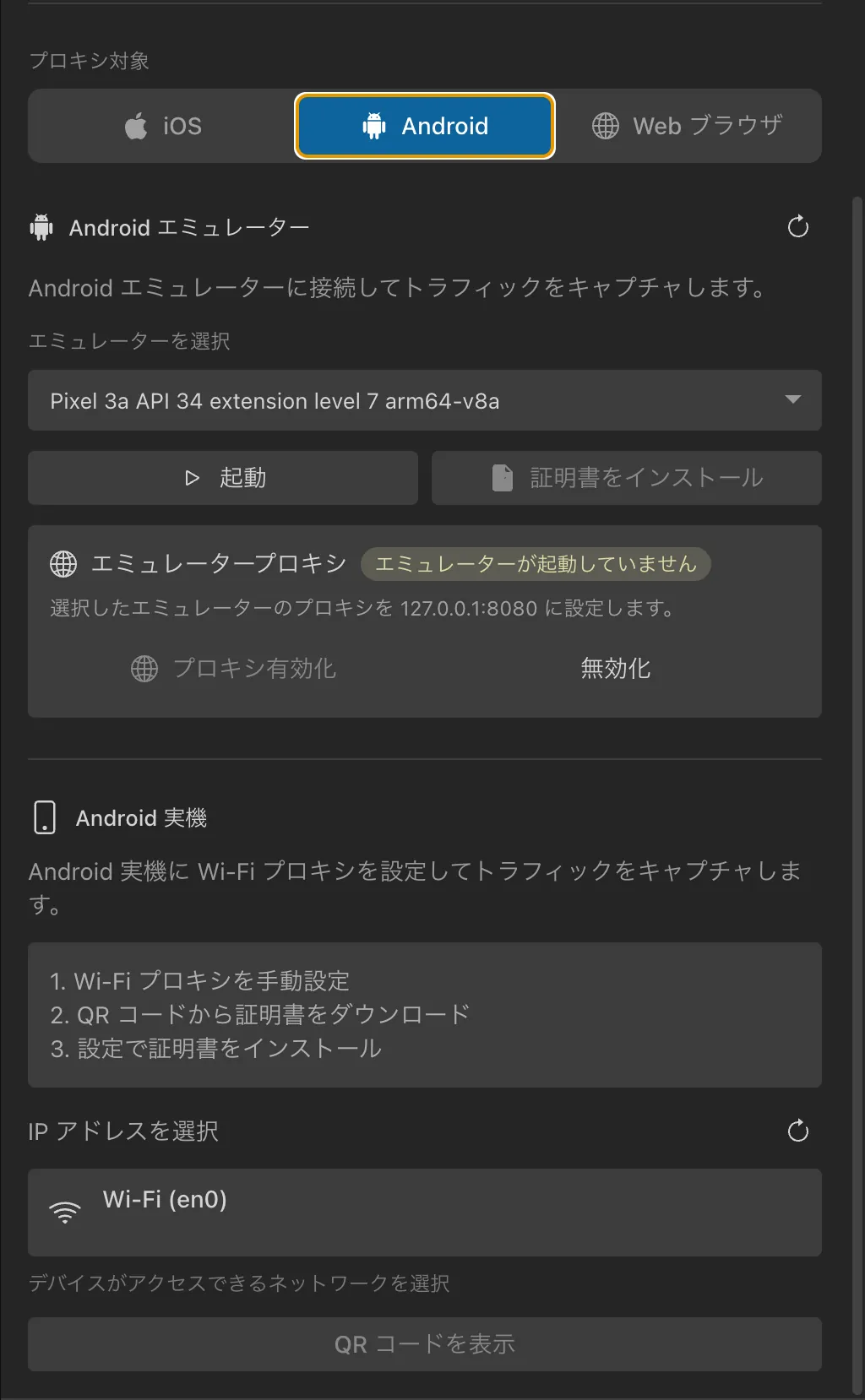
Set the SDK path (only if needed)
The Android SDK Path defaults to ~/Library/Android/sdk. Change it with the steps below only if you installed it elsewhere.
Open Data Management Settings in the sidebar.
Set the SDK path in Android SDK Path.
Install the certificate
As with a real device, you need to install the certificate manually on the Android Emulator.
Select Android in Proxy Settings.
Select the target emulator and click Install Certificate. The certificate is copied to the Download folder and the Files app opens.
In the Files app, tap mimicry-ca-cert.cer and install the certificate. The steps are the same as step 3 for the Android real device.
Run your app from Android Studio.
Important: Use a System image with Google APIs (Writable system) for the Android Emulator. You cannot install the certificate on a Production system image.
Physical iOS device
To use a physical iOS device, set it up in the following 4 steps. Connect your Mac and iPhone to the same Wi-Fi network before you start.
1Configure the proxy
Configure the Wi-Fi proxy manually from the Settings app on your iPhone.
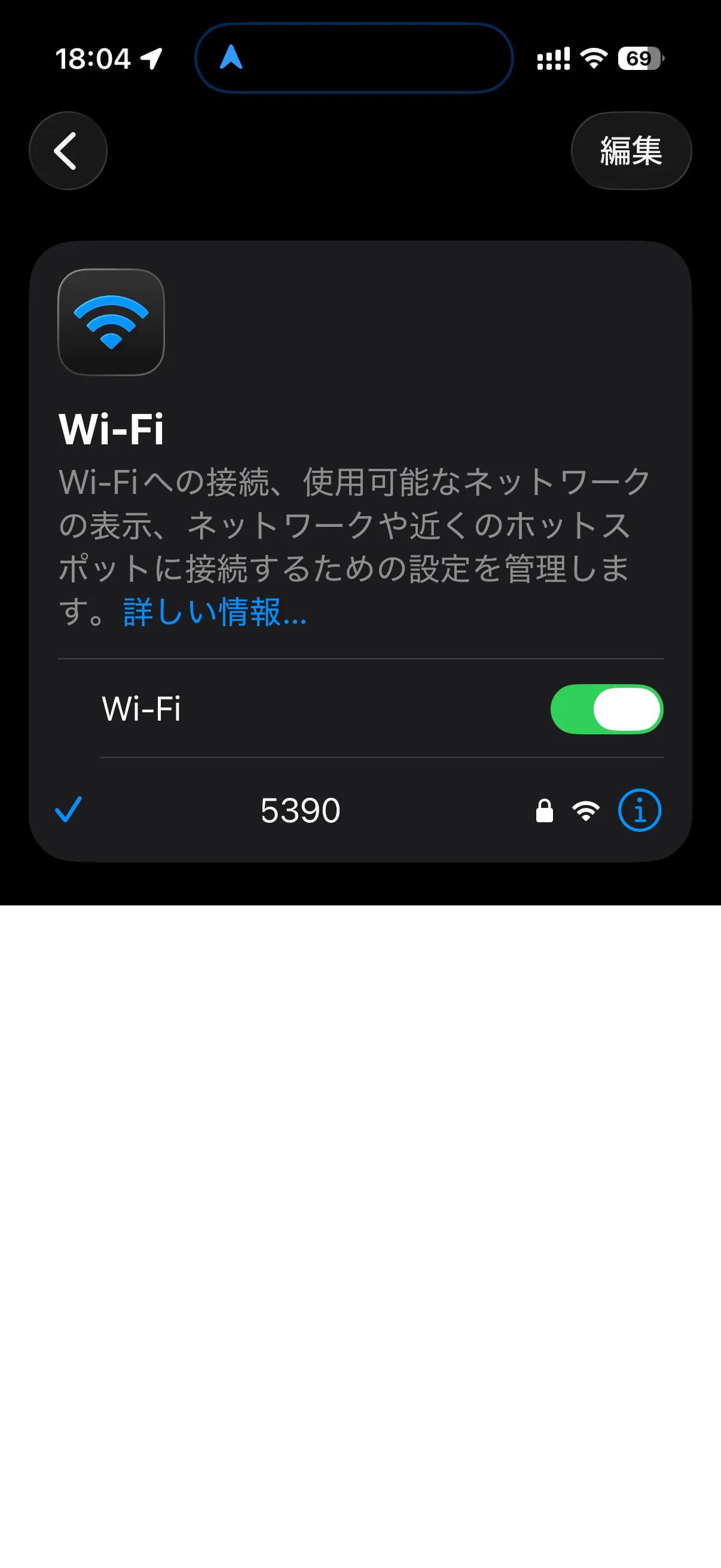
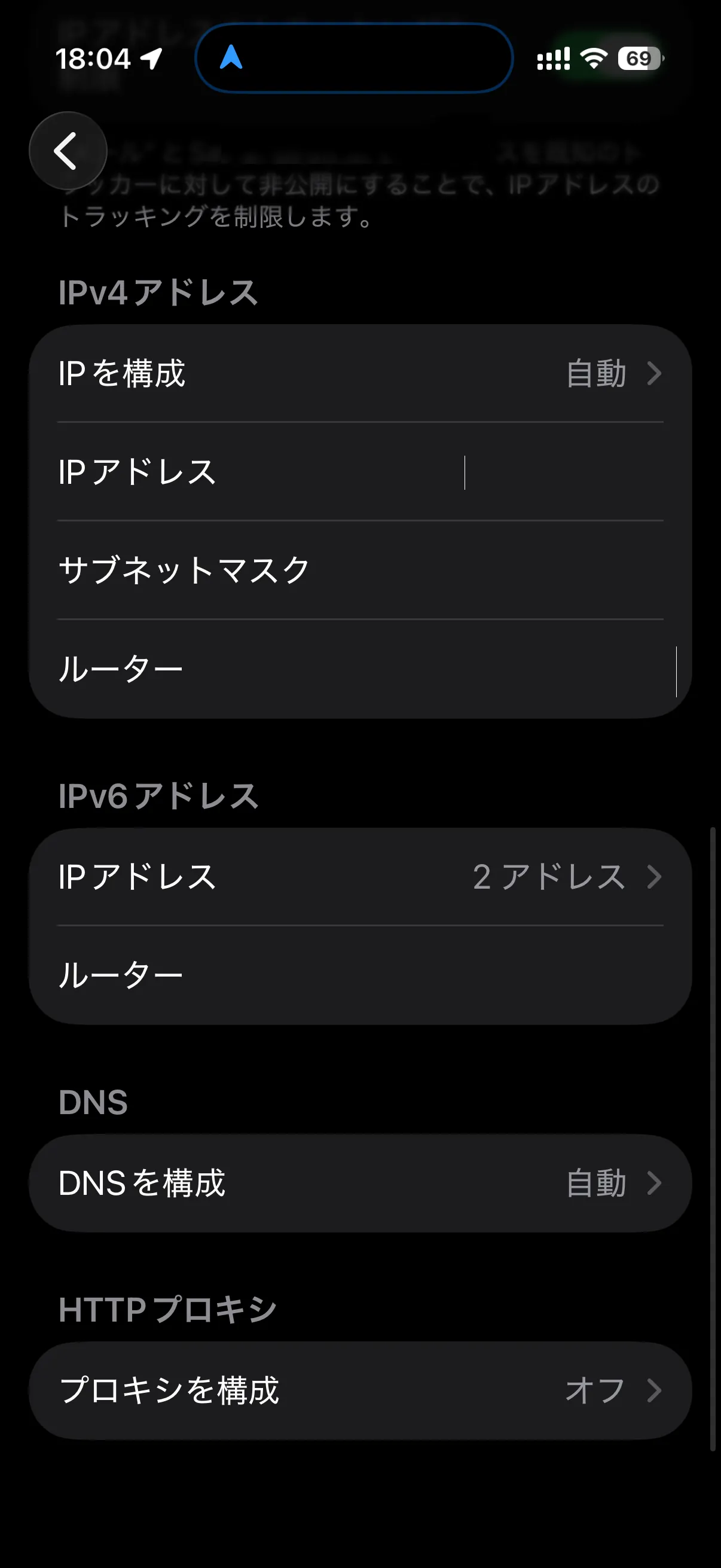
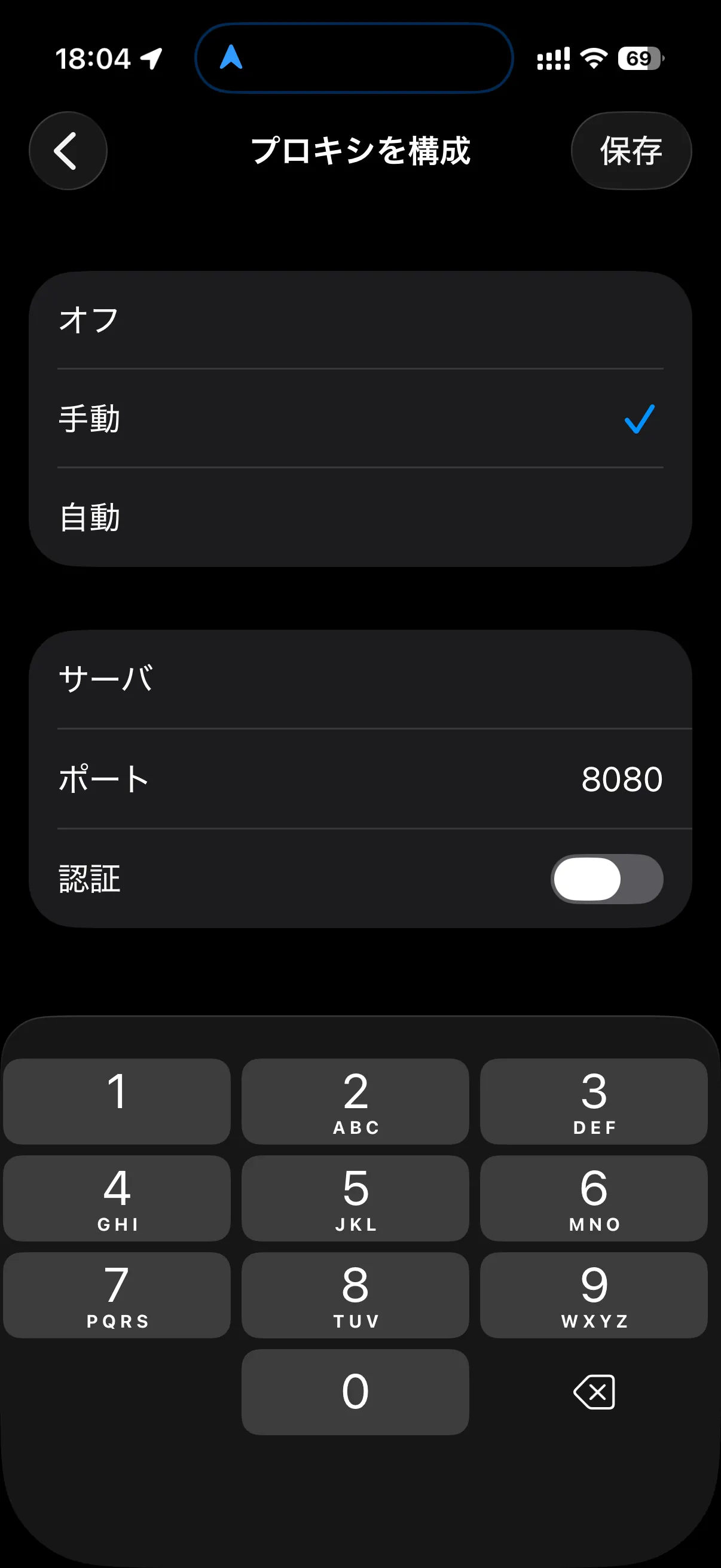
Settings > Wi-Fi > the connected network (i) > Configure Proxy > Manual
Server: the IP address shown by Mimicry Port: 8080
2Download the certificate
After configuring the proxy, scan the QR code in Mimicry to open the page in Safari and download the certificate.
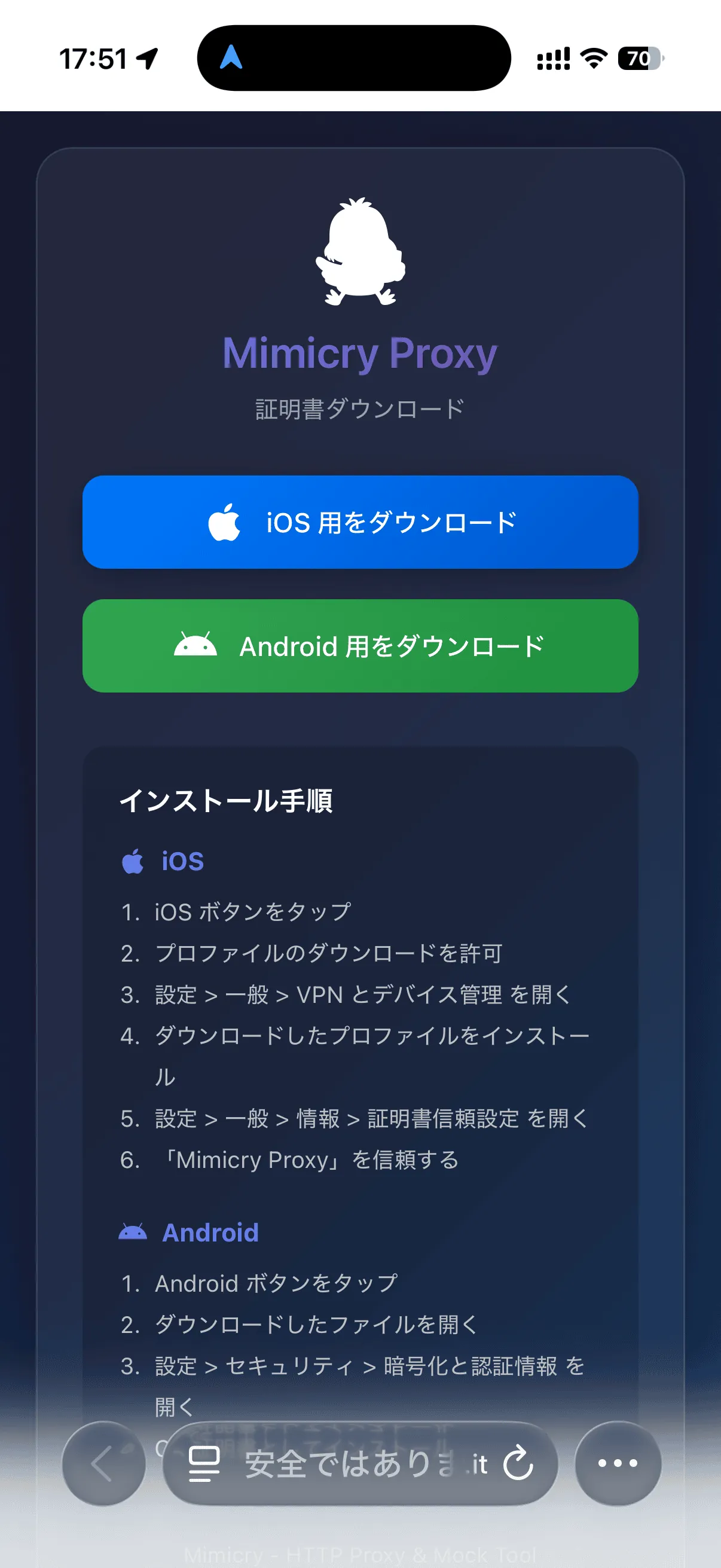
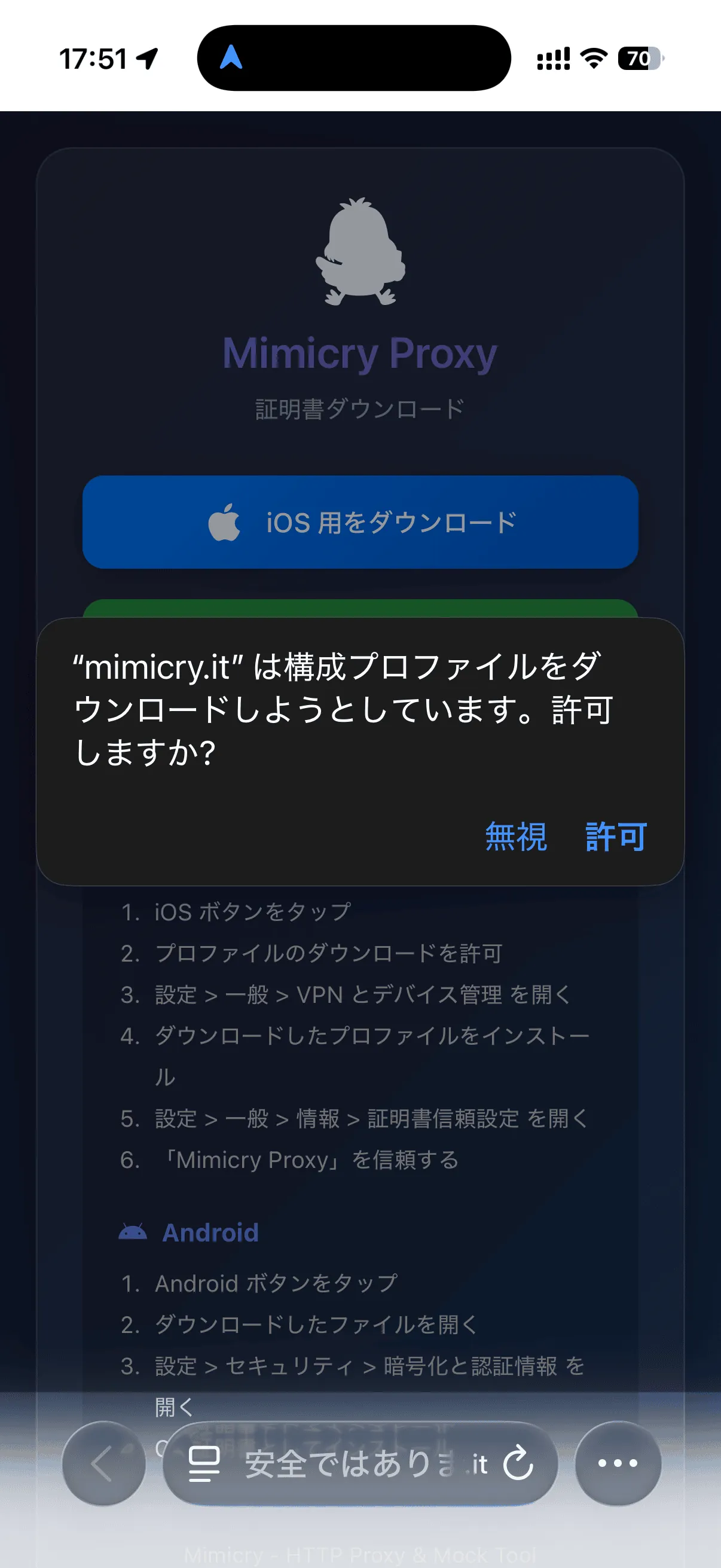
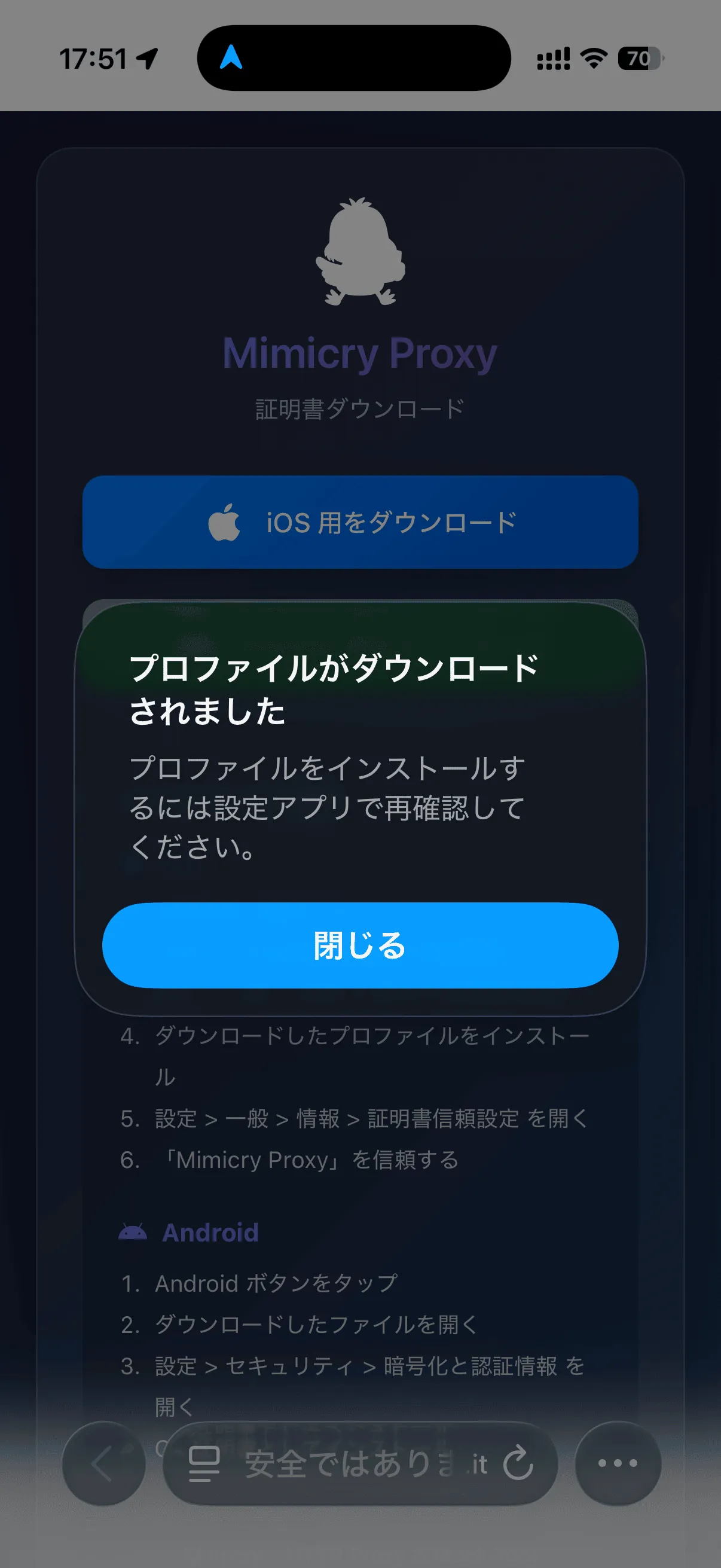
Scan the QR code shown by the Show QR Code button in Proxy Settings.
3Install the certificate
Install the downloaded profile from the Settings app.
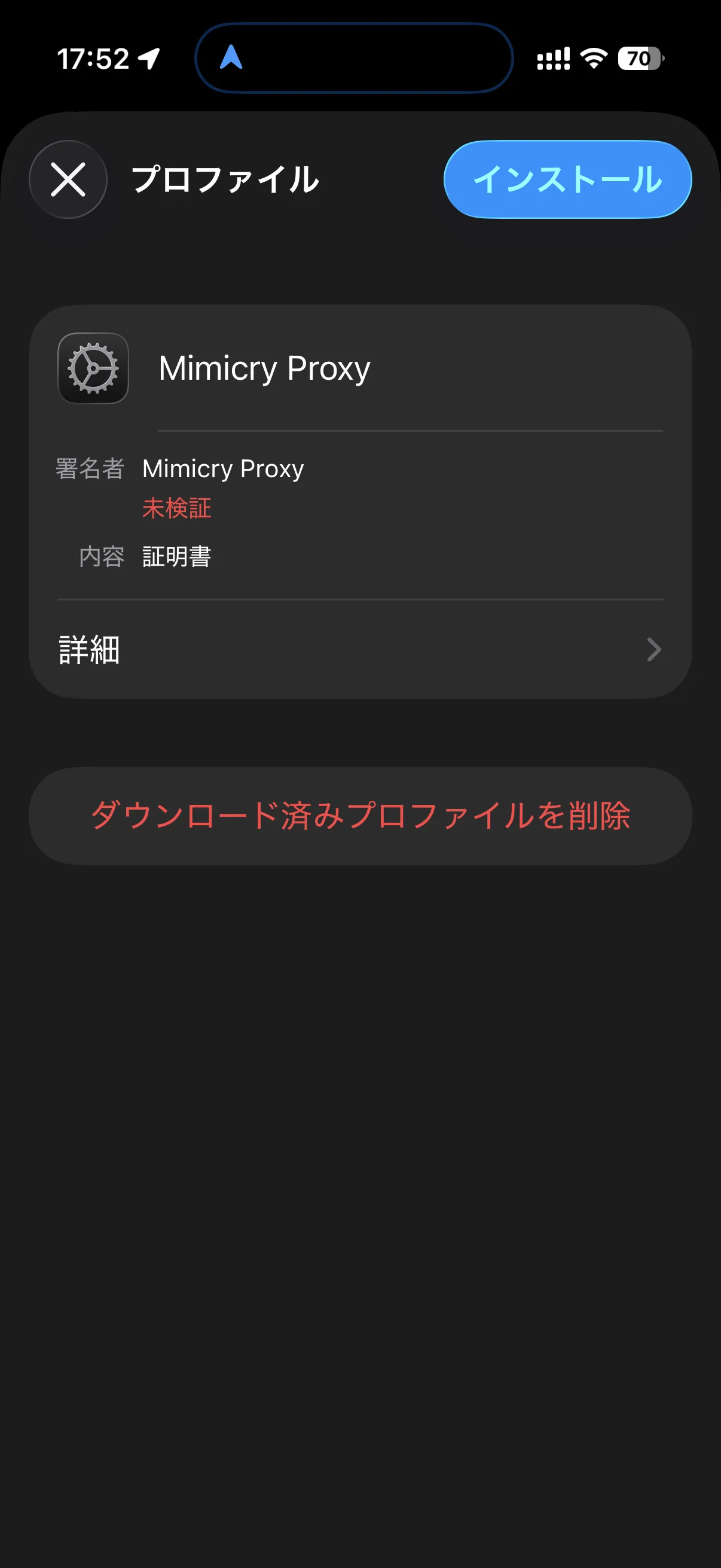
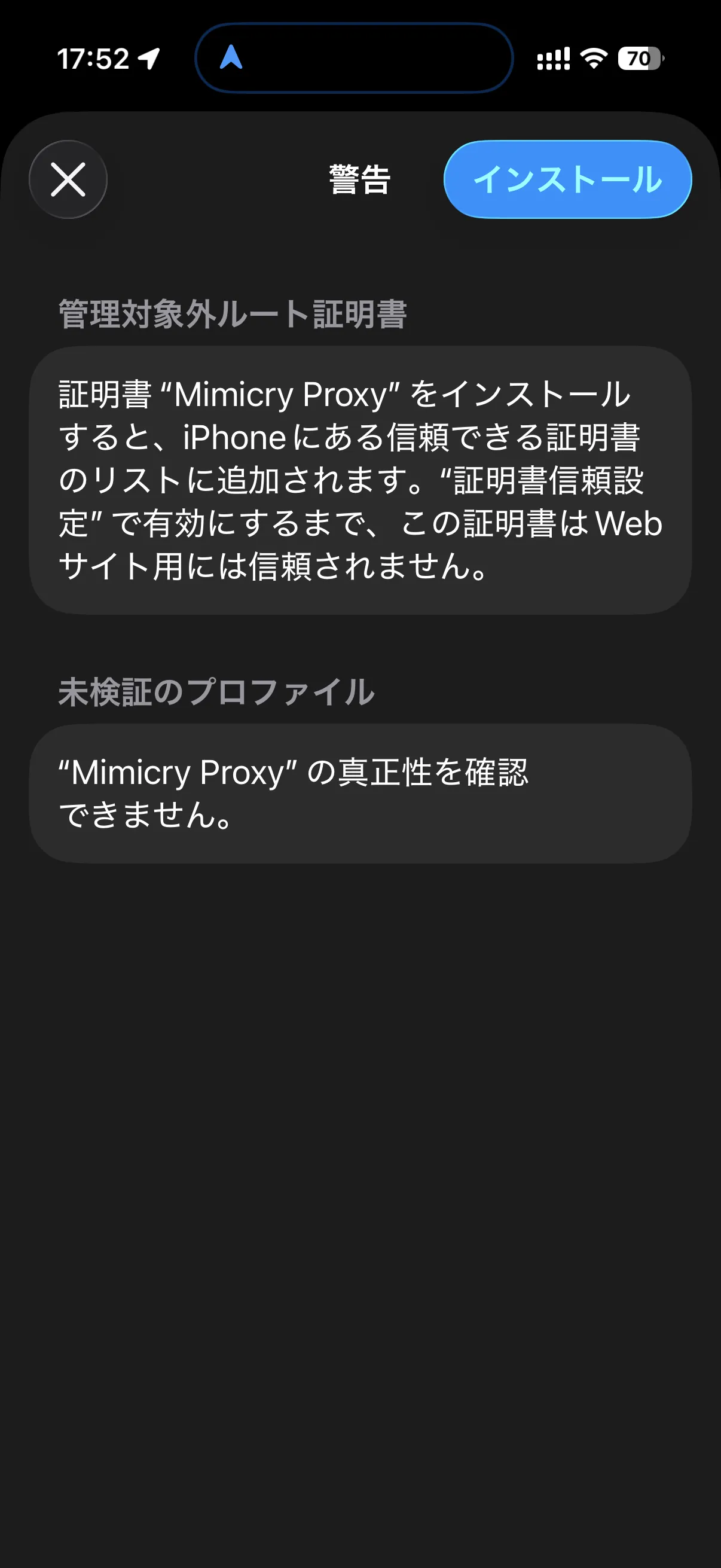
Tap "Install" from Settings > General > VPN & Device Management > Downloaded Profile
4Trust the certificate
To capture HTTPS traffic, you need to enable the trust setting for the certificate.
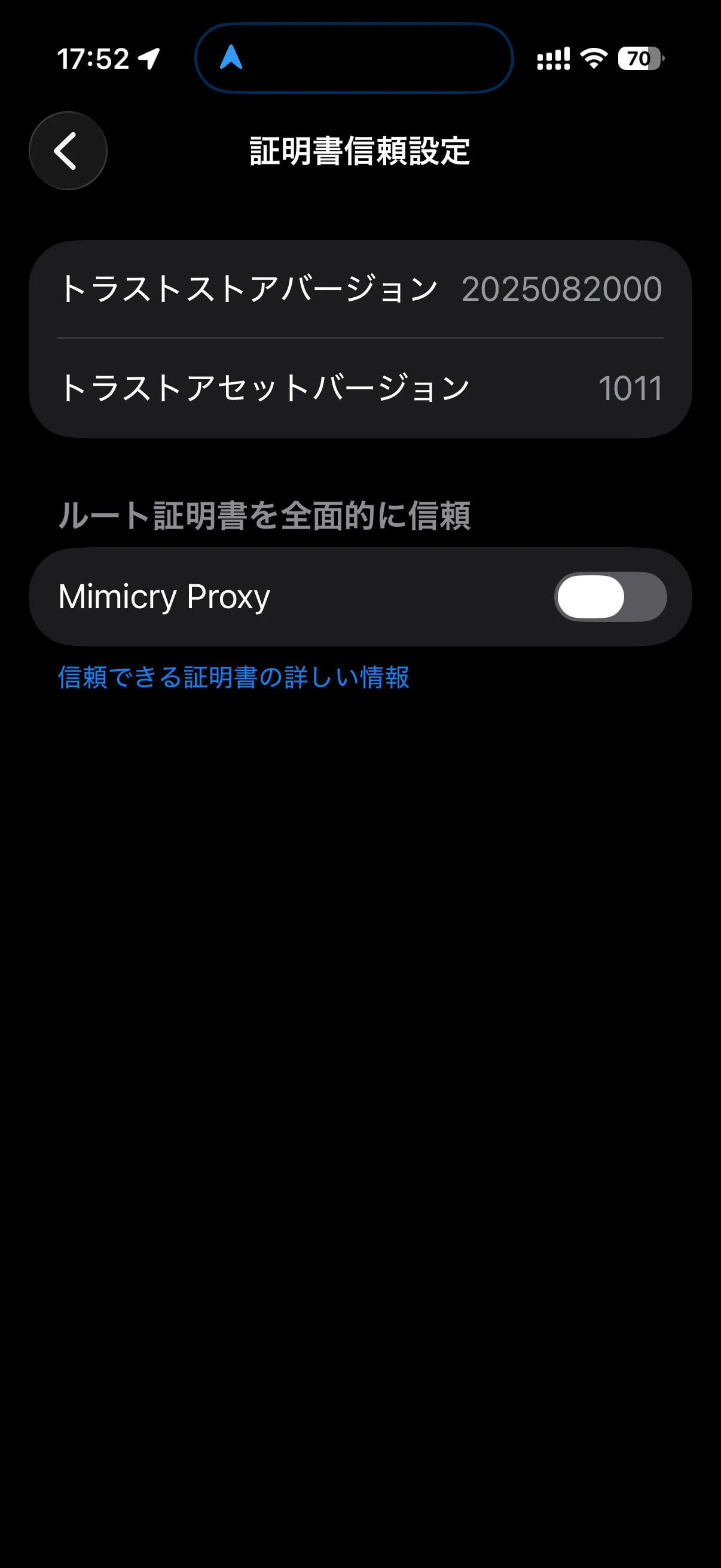
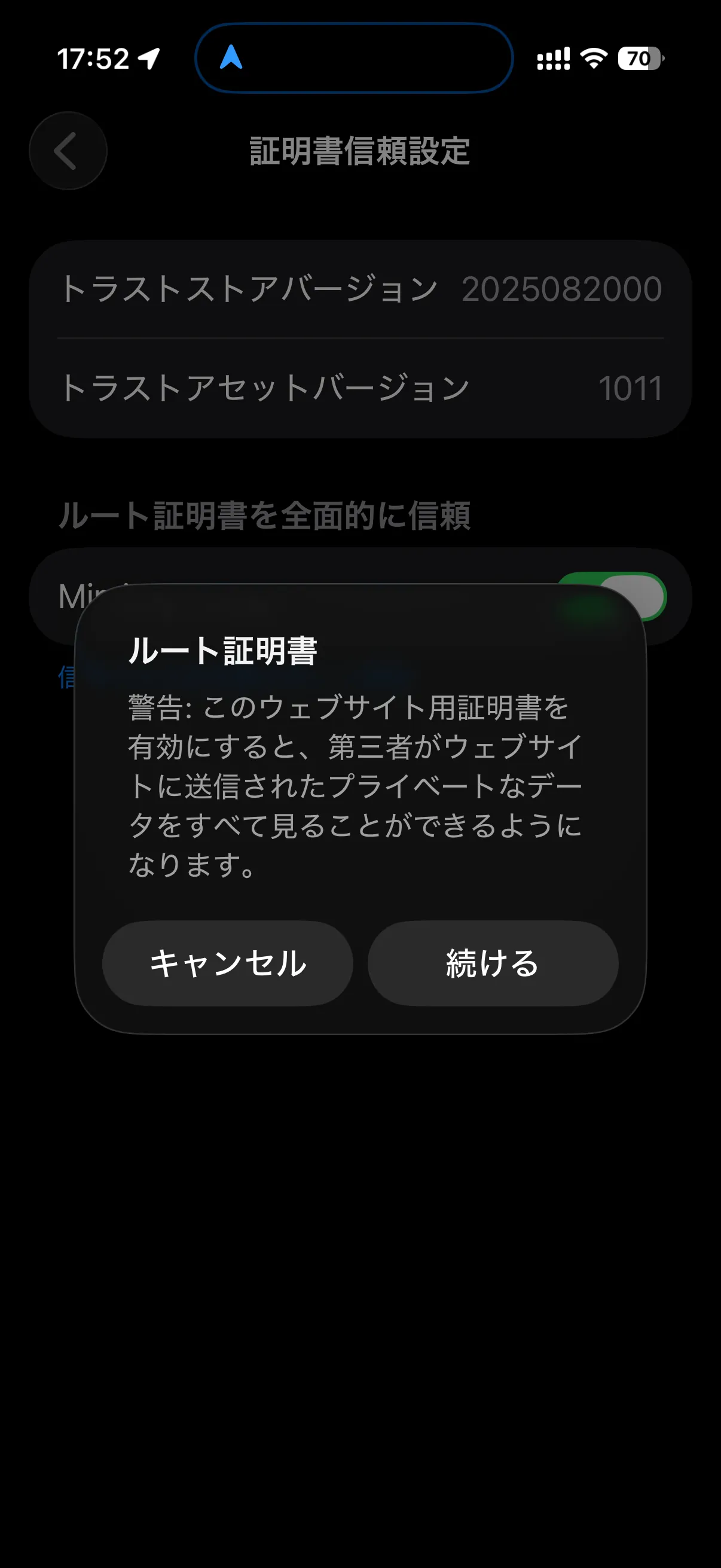
Turn on the "Mimicry Proxy" switch in Settings > General > About > Certificate Trust Settings
Setup complete: Traffic from your physical iOS device is now captured by Mimicry. When you make network requests in Safari or an app, they appear in the traffic log.
Physical Android device
To use a physical Android device, set it up in the following 3 steps. Connect your Mac and Android device to the same Wi-Fi network before you start.
1Configure the proxy
Configure the Wi-Fi proxy manually from the Settings app on Android.
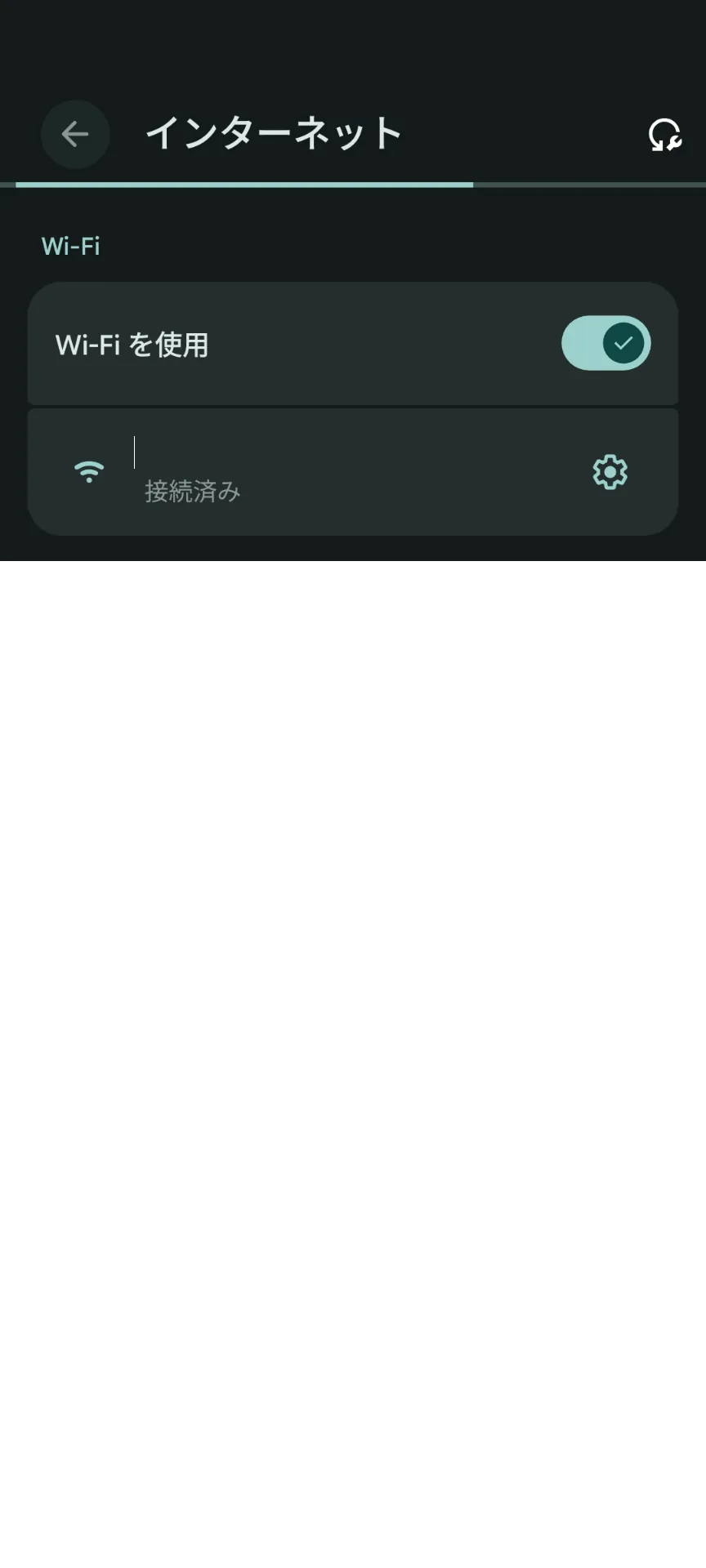
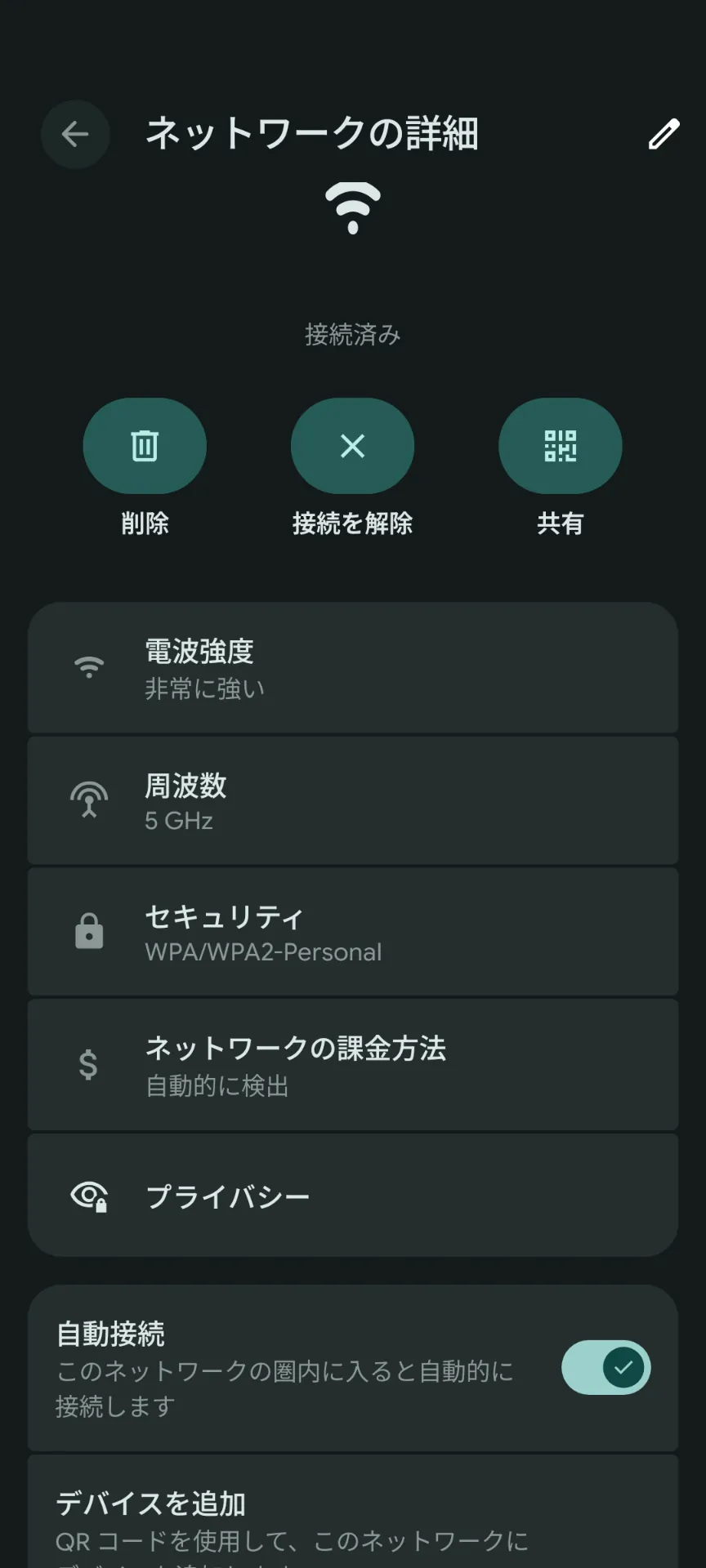
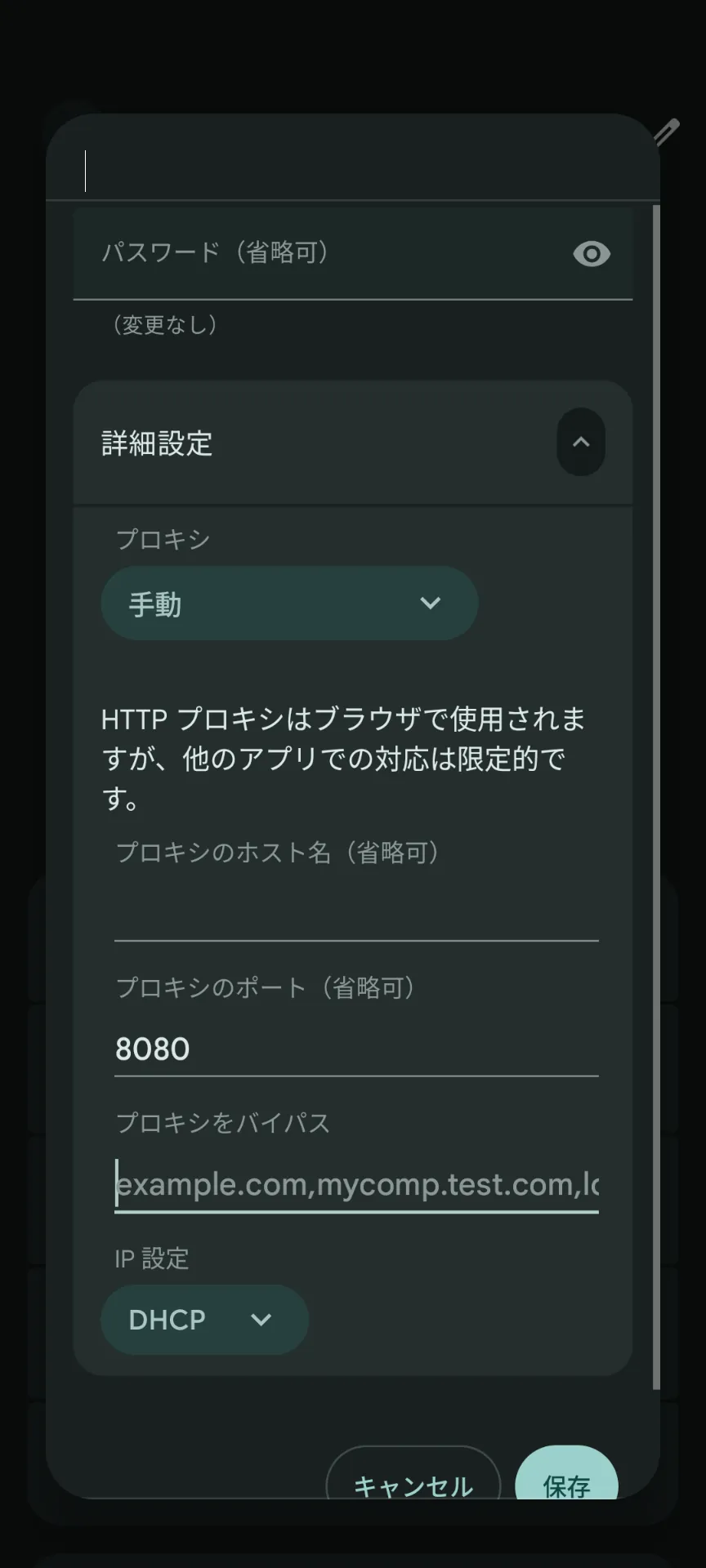
Settings > Network & internet > Internet > settings for the connected network > Proxy > Manual
Host name: the IP address shown by Mimicry Port: 8080
2Download the certificate
After configuring the proxy, open the certificate download page in a browser.
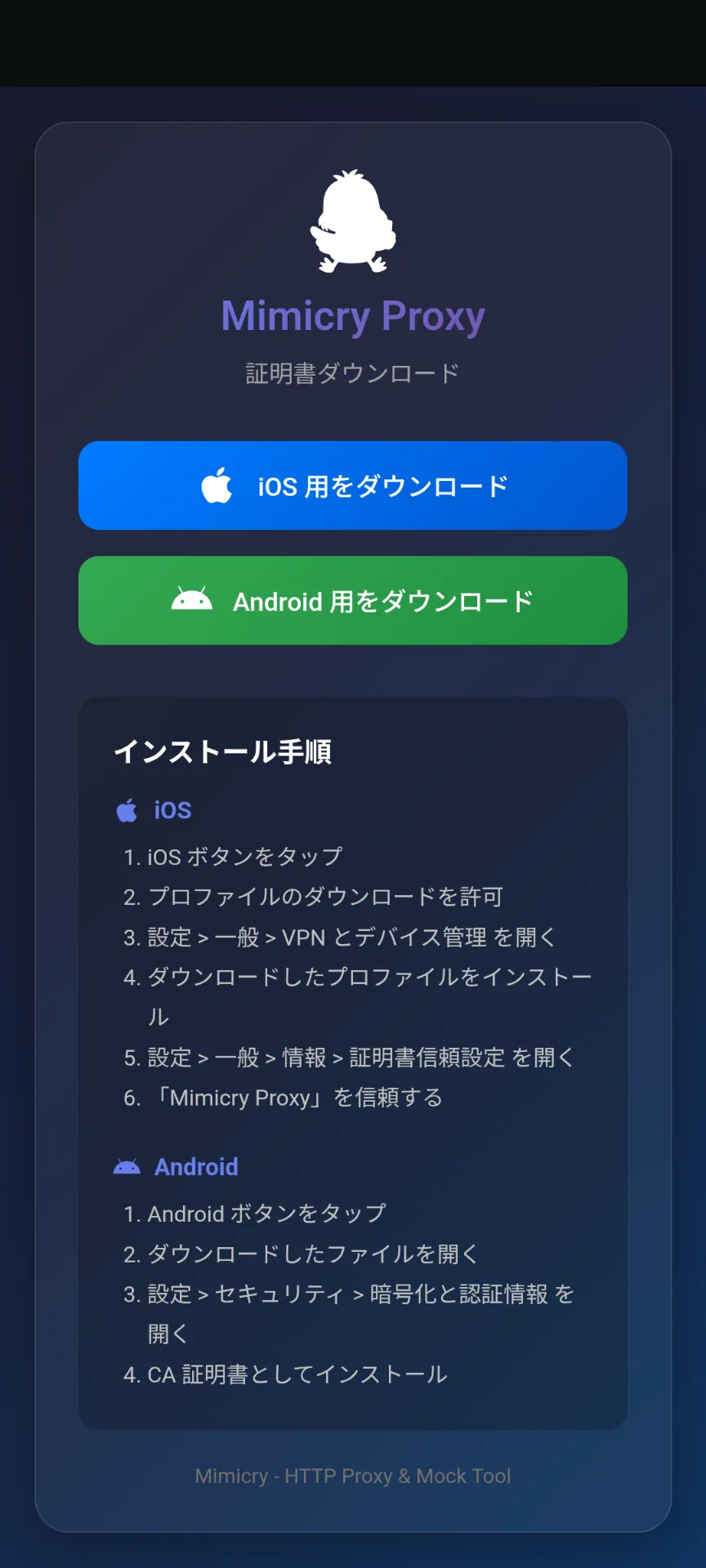
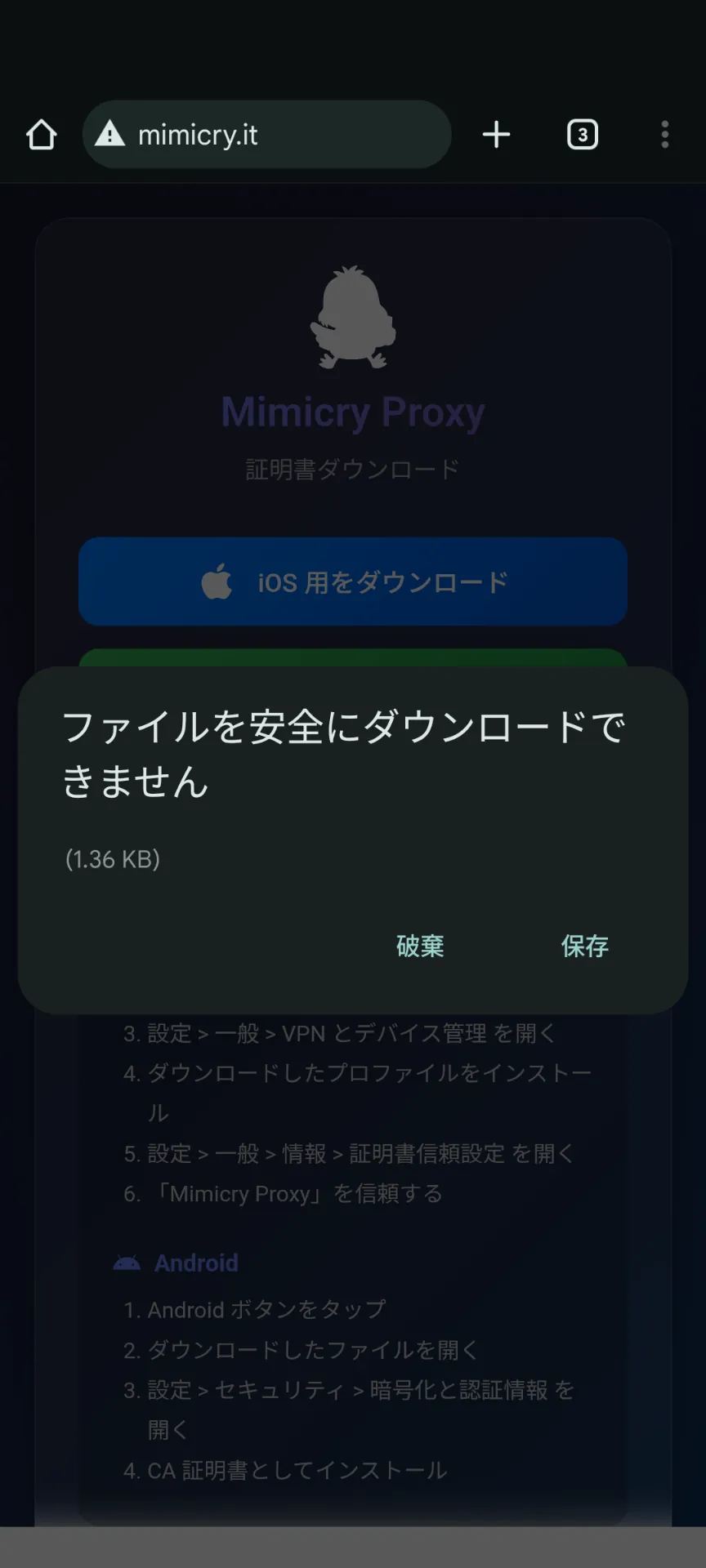
Scan the QR code shown by the Show QR Code button in Proxy Settings, then tap the "Android" button.
3Install the certificate
Install the downloaded certificate from the Settings app.
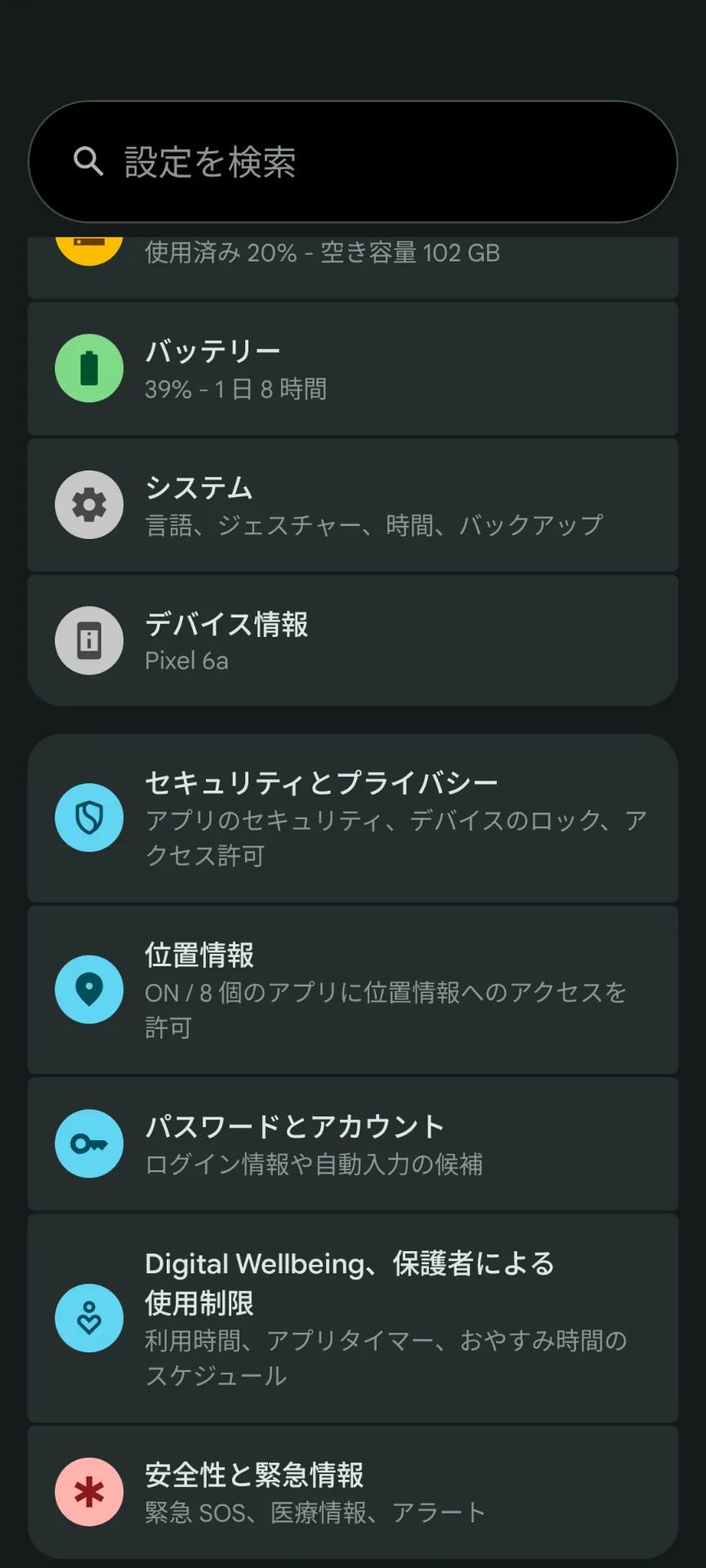
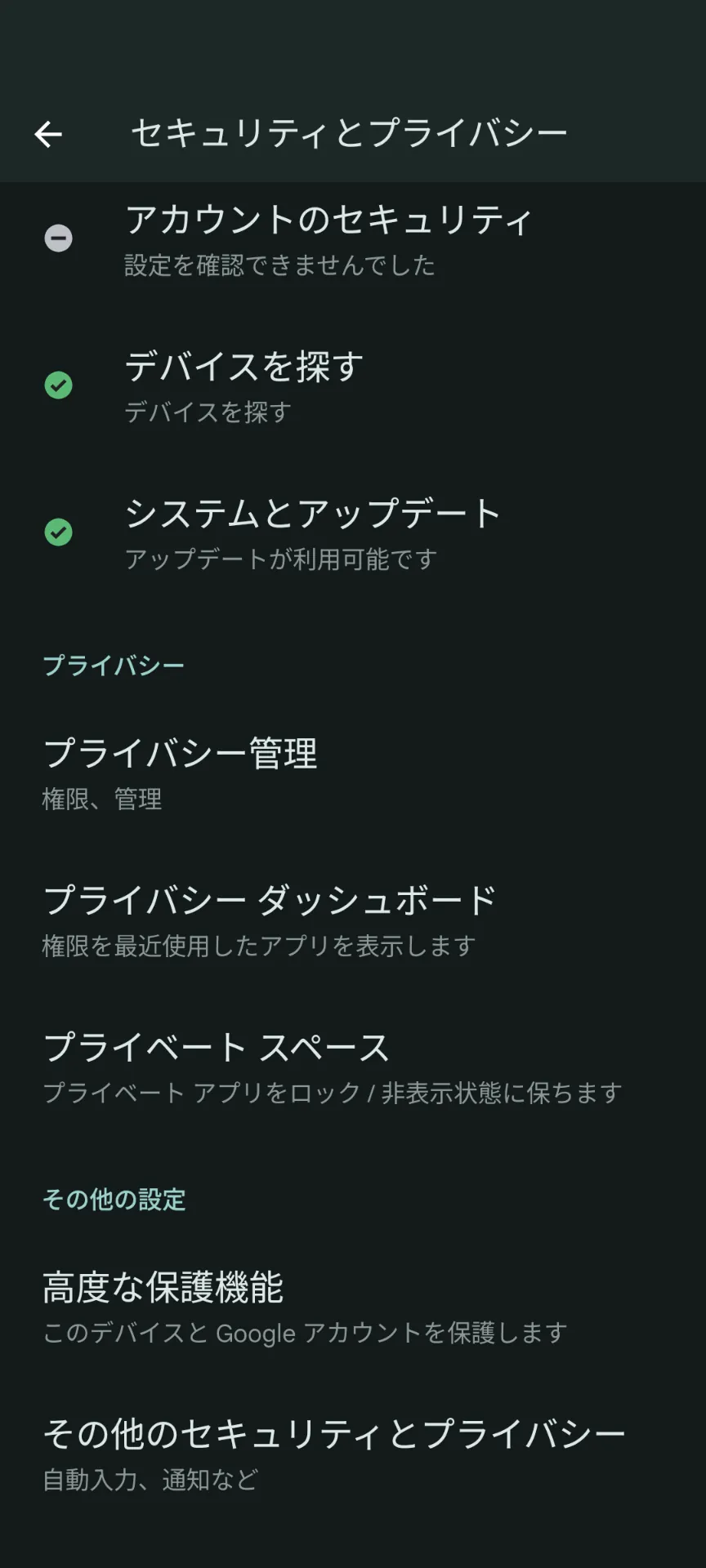
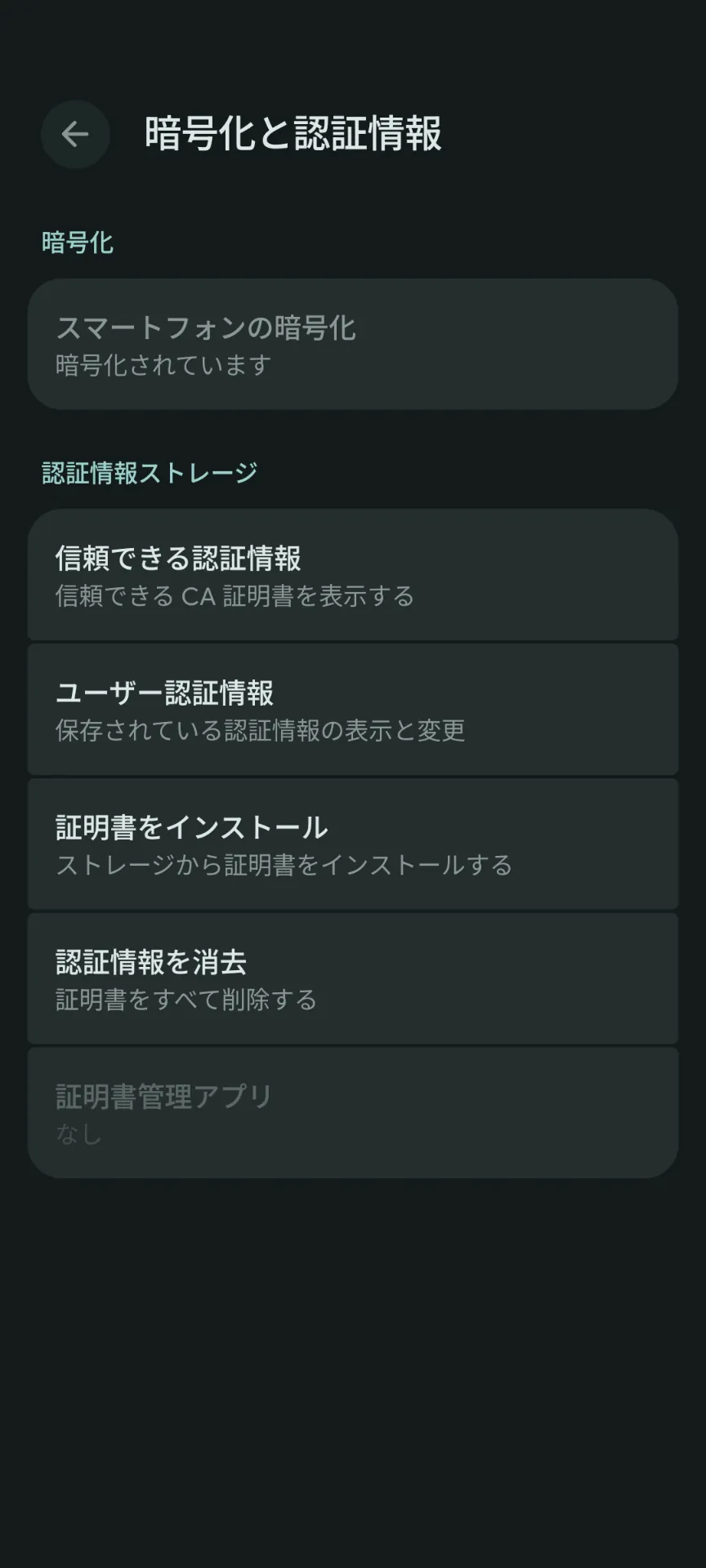
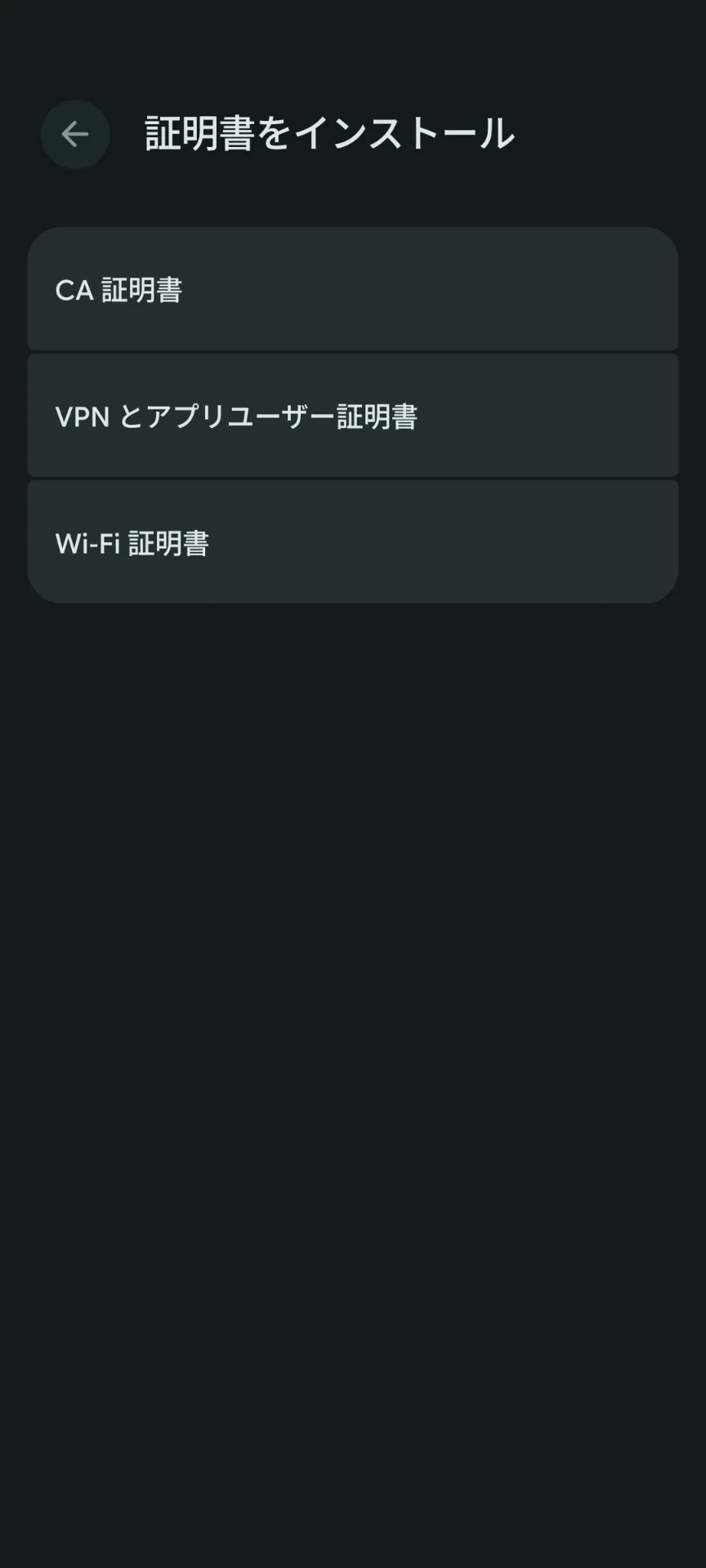
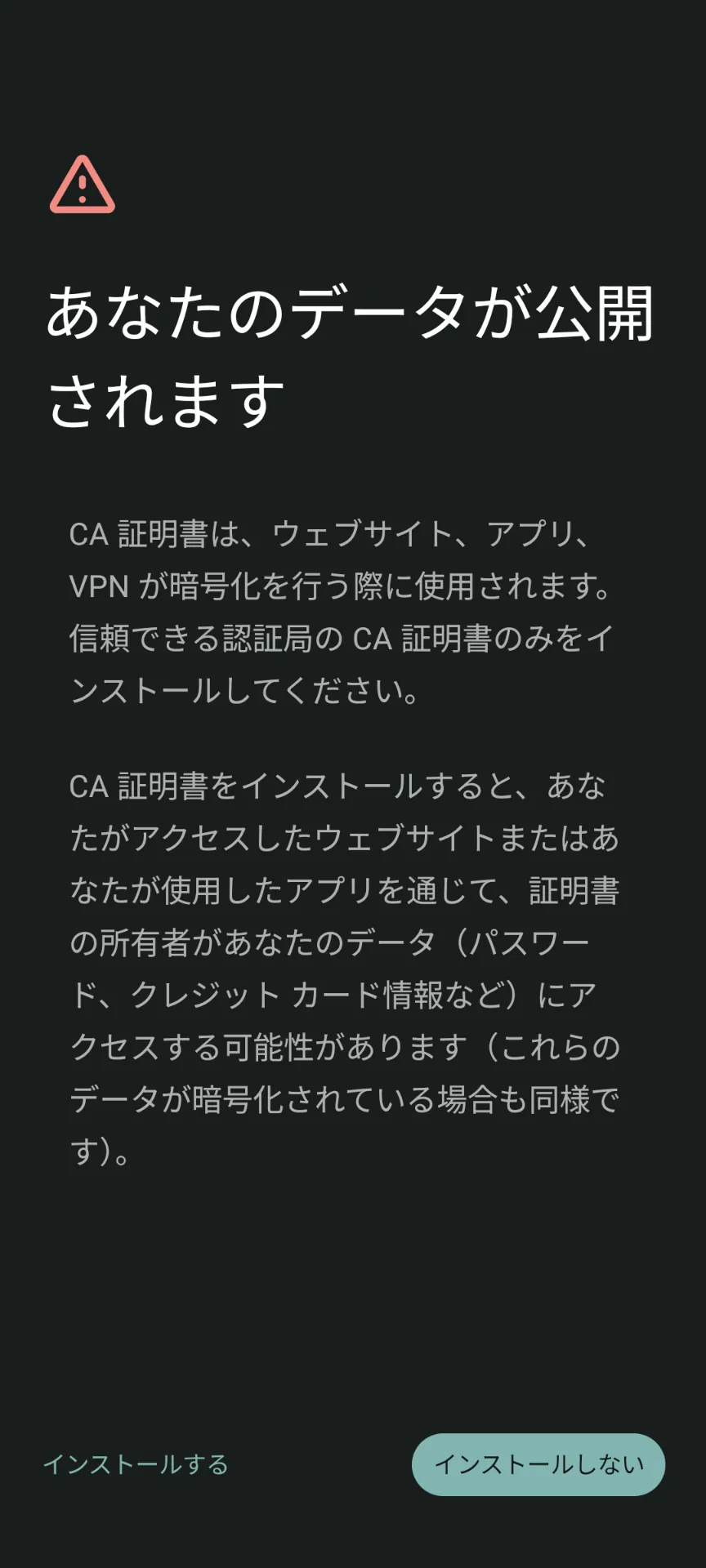
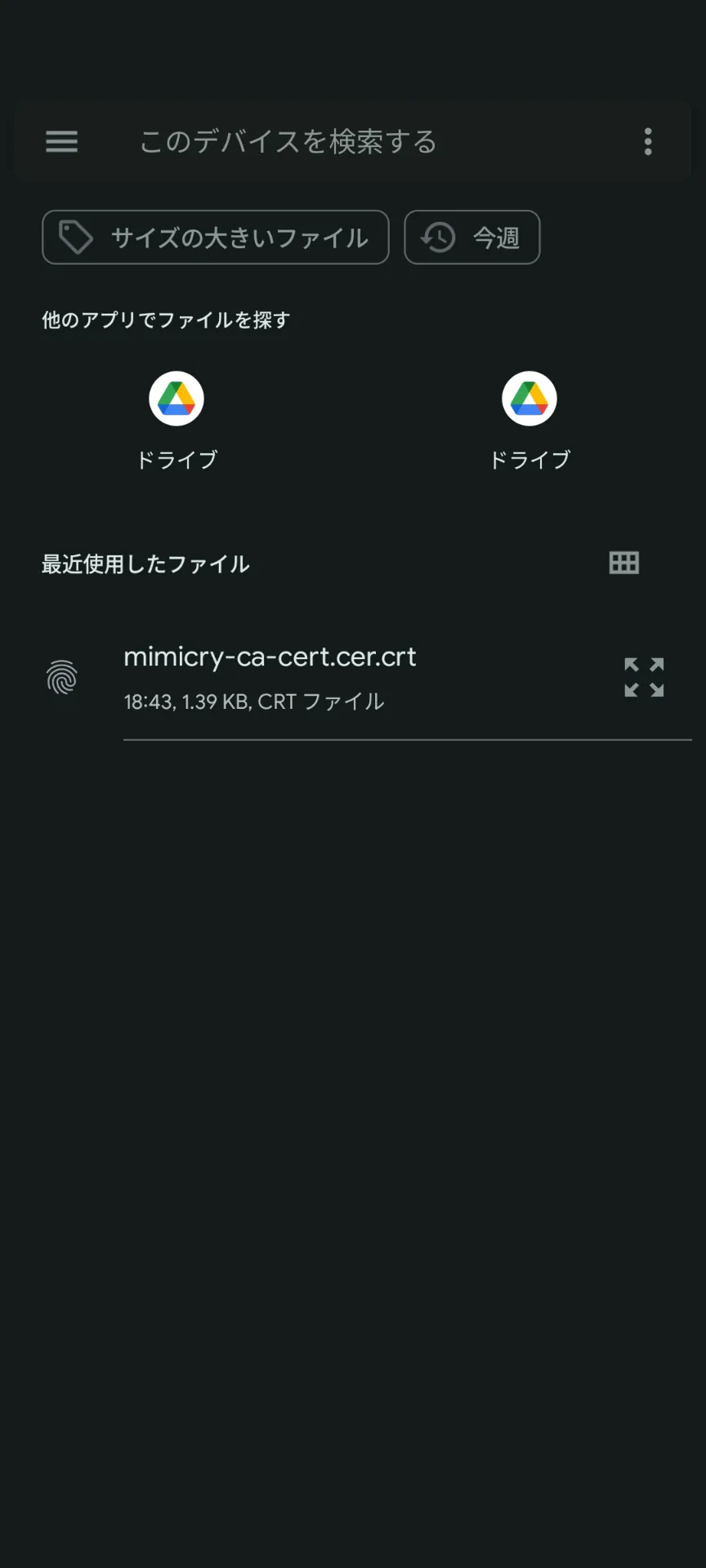
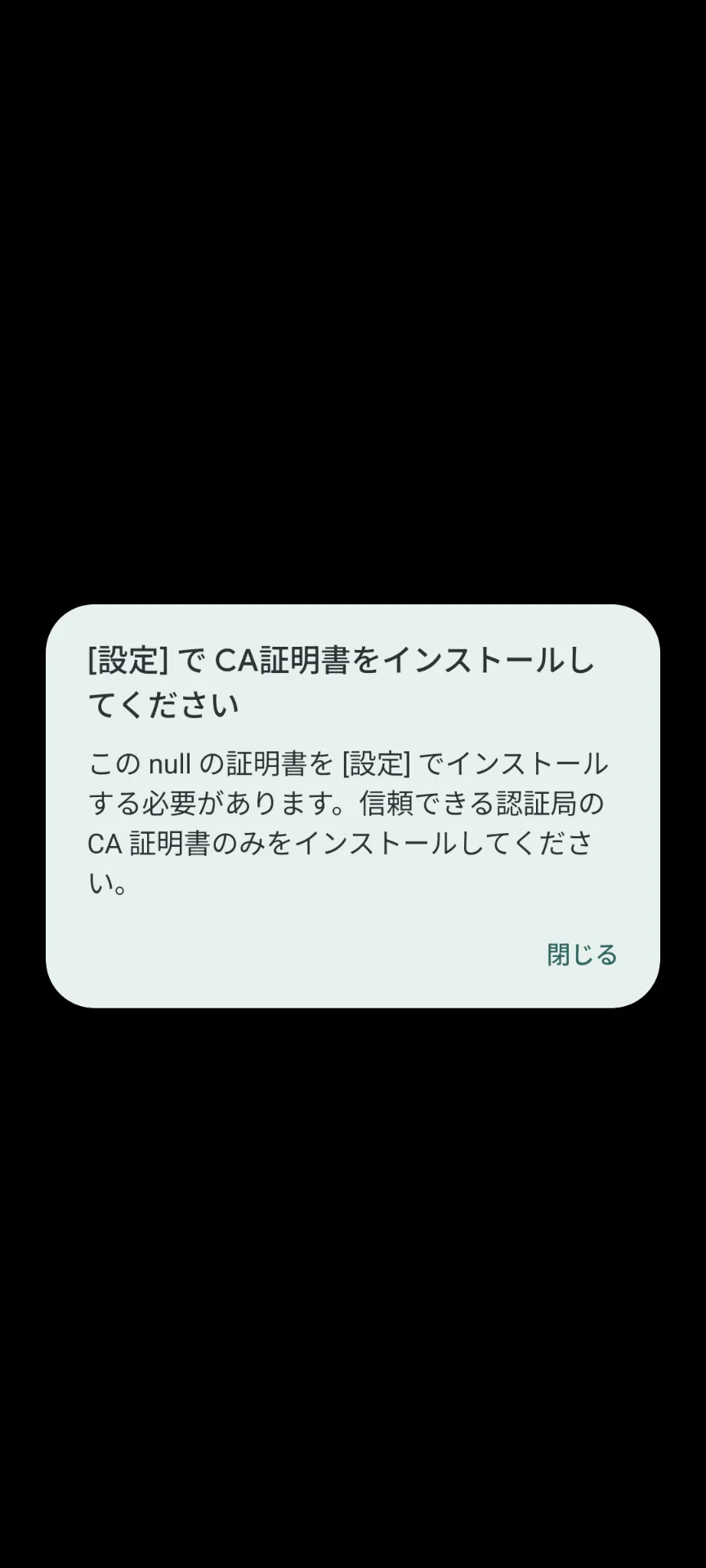
Settings > Security & privacy > More security & privacy > Encryption & credentials > Install a certificate > CA certificate
Setup complete: Traffic from your physical Android device is now captured by Mimicry. When you make network requests in a browser or an app, they appear in the traffic log.
Note: The layout of the settings screens varies by Android manufacturer and version. Search for terms like "certificate" or "CA certificate" to find the relevant setting.
Troubleshooting
Nothing appears in the traffic log
- Check that the certificate is installed correctly
- Check that the proxy server is running
- For a physical iOS device, check that the certificate trust setting is enabled
Certificate installation fails (Android)
- Check that you are using a system image with Google APIs (Writable system)
- Check that the Android SDK Path is set correctly
- Try restarting the emulator
HTTPS requests fail
- Try reinstalling the certificate (Reinstall Certificate)
- If the app uses Certificate Pinning, Mimicry cannot intercept it